Tuesday, 19 May 2015

Best Served Cold by Sally Spencer

Title: Best Served Cold / Author: Sally Spencer / Publisher: Severn House / Release Date: 1 August 2015 / Rating: 4/5


In the latest in this '70s set series, a long-disbanded provincial rep company get back together after 20 years to revive their production of Thomas Kyd's The Spanish Tragedy. Unfortunately, the whole thing has turned into a vanity project for the lead actor, Mark Cotton, who in the interim has become a household name in a cop show on the telly. Tensions build, a gruesome murder ensues right in front of the first night audience, and DCI Monika Paniatowski must investigate, even though she's expecting a baby at any moment.

During the opening stages of the novel, the seedy theatrical backdrop is handled very well, with plenty of backstage bitchiness and simmering resentments. The author creates a cast of amusingly flawed yet ultimately sympathetic characters and clearly has a lot of fun with Mark Cotton, a monster in the great tradition of vain, preening, venomously spiteful luvvies. And there's no loss of vim and verve once the investigation gets under way, largely thanks to the entertainment value of Paniatowski's two colourful sidekicks, the long-suffering DI Beresford and the spiky DS Meadows.

Throughout, Sally Spencer shows a gift for brisk narrative, crisp prose and spirited banter, while the period setting is handled so subtly than for most of the time you're scarcely aware of it. Fans of mysteries with a theatrical or showbiz milieu – especially Simon Brett's Charles Paris novels – need not hesitate.

Mrs Pargeter's Principle by Simon Brett


Title: Mrs Pargeter's Principle / Author: Simon Brett / Publisher: Severn House / Release Date: 1 August 2015 / Rating: 3/5

Simon Brett is one of the most reliably entertaining performers in the world of cozy crime, with several series to his name, from the relatively down to earth Fethering novels to the farcical country house mysteries of Blotto and Twinx. Like the latter, the Mrs Pargeter novels display the more whimsical side of Brett's talent. The eponymous Mrs Pargeter is a wealthy widow, whose late husband was apparently a criminal mastermind (one of the pleasures of the series is the slow drip-feed of information gradually filling in a picture of this mysterious but likeable figure).
 
Mrs Pargeter now passes her time investigating various cases, with the aid of sundry willing helpers with names like Truffler and Gizmo whose phone numbers she finds in her late husband's little black book. In this new tale, she delves into the past of another one of her husband's old acquaintances, a recently deceased knight of the realm, only to quickly find herself on the end of threats and reprisals.

It's a leisurely adventure, with plenty of opportunity for long lunches at Mrs Pargeter's favourite hotel, and the resourceful lady even has time to plan a wedding. The settings are chic – Mrs P's mansion in Chigwell sounds very nice – the dialogue is droll, and the comical supporting characters, especially Gary, Mrs P's lovelorn chauffeur, are as deftly drawn as one would expect from a writer of Brett's pedigree. Arguably, it's all a little too fanciful and removed from everyday reality for its own good, but it will keep Brett's fans going nicely until the next Charles Paris or Fethering novel comes along.


Tuesday, 5 May 2015

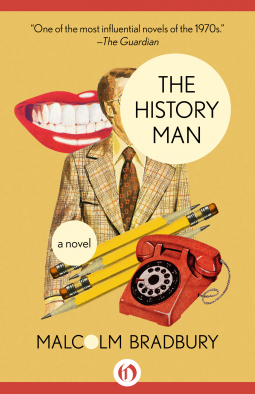
The History Man by Malcolm Bradbury


Title: The History Man / Author: Malcolm Bradbury / Publisher: Open Road Integrated Media / Release Date: 12May 2015 / Rating: 5/5

 
Once upon a time, in the '70s and '80s, the campus novel was a mainstay of British fiction, but even back in the days when a new one was being published every other week, Malcolm Bradbury's humorous tale of the predations of a radical university lecturer named Howard Kirk stood out as something different.

When he's not penning works of popular sociology, Kirk teaches in an aggressive, confrontational way at the gleaming new Watermouth University. And when he's not doing either of those things, he's bedding students and fellow faculty members and stirring ferment in an attempt to relive the Sixties. Meanwhile, his wife Barbara looks for self-realization by having affairs of her own and blasting Howard with her constant complaints.
 
Why is The History Man a classic? It's not just that Bradbury's depiction of “the swinging Kirk scene” bristles with intelligence, although it does. It's also presented in way that that differs markedly from the cosy tone of your average British literary comedy. The narrative is in the present tense, and the story's ironic insights are couched in the sort of chilly, synthetic, shrink-wrapped prose you might expect to encounter in an academic case study.

The result might not be a “good read” in a conventional sense, but it's bracing and invigorating, blowing mental cobwebs right and left. Bradbury describes parties and sexual encounters with an anthropologist's attention to detail. He's brilliant on gender politics, social planning, the menacing inhumanity of post-war architecture, the radicalism of the Sixties (“hate and revolutionary zeal raged; people in the town poked students on the buses with umbrellas”) and the hypocrisies of what we would now think of as the liberal establishment. Tellingly, the Kirk's house is “close to the real social problems, the beach, the radical bookshop … and the rapid ninety minute electric train service up to London”.

Although, as Bradbury himself points out in an afterword, the phenomenon of the trendy radical sociologist was on the wane by the end of Seventies, The History Man remains required reading for anyone trying to demystify the orthodoxies of the political left, and many of its insights still apply – there's a plot thread to do with a proposed visit to the university by a controversial geneticist called Mangel and the students' violent reaction to it which is exactly the sort of thing that you can imagine happening today. All of which makes The History Man not just a good book but an important one.